

Parking Lot Striping, Line Painting And Markings in PA, MD, & DE
CONTRACTING SERVICES
Going the Extra Mile: Serving Customers Beyond Our Primary and Secondary Areas
At D.E. Gemmill, we believe in going above and beyond for our customers. While not specifically highlighted on the map, we do consider projects outside our primary and secondary service areas. We carefully evaluate each opportunity to ensure that we can provide competitive pricing and exceptional results, no matter where your business is located.
When you choose D.E. Gemmill for your parking lot striping needs, you can trust that we’ll work closely with you to assess the feasibility and cost-effectiveness of your project, ensuring a seamless and satisfactory experience from start to finish.
Your Partner in Parking Lot Striping Excellence
With our wide service area, dedication to quality, and customer-centric approach, D.E. Gemmill is your go-to partner for all your parking lot striping needs. Whether you’re in the heart of Philadelphia or beyond, we’re here to help you create a safer, more organized, and more attractive parking lot that leaves a lasting impression on your customers and employees.
Maintenance and Upkeep
To ensure your parking lot striping remains clear and effective, regular maintenance and upkeep are essential. Consider the following tips:
Regular cleaning:
Regularly sweep and clean your parking lot to remove debris, dirt, and oil stains that can obscure markings and reduce their visibility.

Prompt repairs:
Address any cracks, potholes, or other pavement damage promptly to prevent further deterioration
and maintain the integrity of your striping.
Restriping schedule:
Establish a regular restriping schedule based on the level of traffic and wear in your parking lot. High-traffic areas may require more frequent touch-ups to maintain clear markings.
Seasonal considerations:
Be mindful of seasonal weather changes in the Mid-Atlantic region. Schedule restriping projects during mild weather conditions for optimal paint adhesion and drying.
Choosing a Professional Striping Company
When selecting a professional parking lot striping company, consider the following factors:
Experience and reputation:
Look for a company with a proven track record of successful projects and satisfied clients in the region.
Quality of materials and equipment:
Quality of materials and equipment: Ensure the company uses high-quality, durable paints and state-of-the-art equipment for the best results. Inquire about the material application rates, as the mil thickness of the paint can impact its durability and longevity. Mil thickness refers to the thickness of the paint film when applied, with one mil equaling 1/1000th of an inch. Other material application rates to consider include the spread rate (square feet covered per gallon) and the transfer efficiency (the percentage of paint that adheres to the surface). These factors can affect the overall quality and consistency of the paint job.
Range of services:
Choose a company that offers a comprehensive range of striping services to meet your specific needs, from basic layouts to custom designs and stencils.
Pricing and value:
While cost is an important factor, prioritize companies that provide transparent pricing and deliver value through high-quality workmanship and customer service.
Sustainability and environmental responsibility:
Consider companies that use eco-friendly, low-VOC paints and follow environmentally responsible practices.
Striping Materials and Technologies
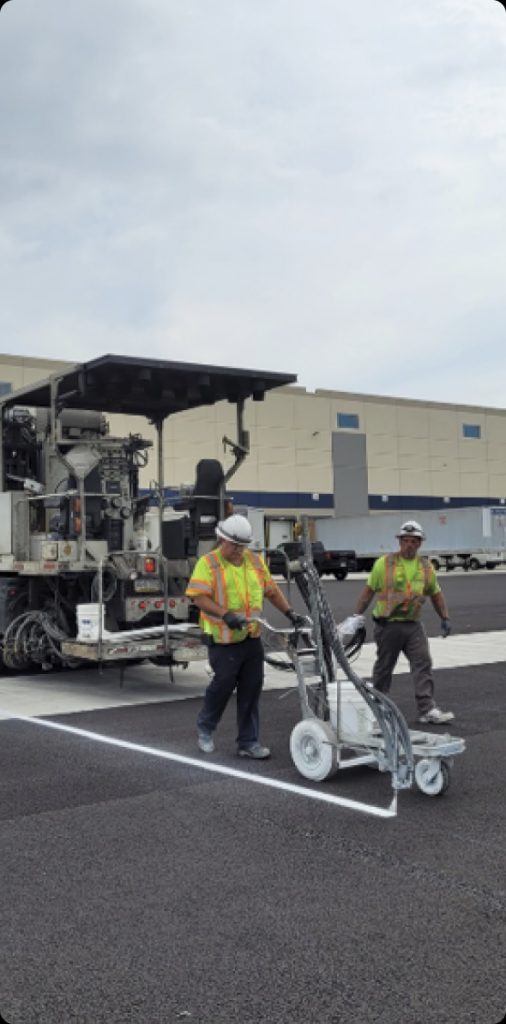
As a business owner, you want to ensure that your parking lot striping is not only attractive but also durable and long-lasting. Advancements in striping materials and technologies have made it possible to achieve these goals while also considering environmental impact. Let’s explore the various options available:
Types Of Paints
Water-based and solvent-based paints used in parking lot striping must both meet specific VOC (volatile organic compound) requirements set by environmental regulations. These standards ensure that the paints used are compliant with air quality guidelines and minimize harmful emissions.
Water-based paints:
These paints are a popular choice for striping projects during the warmer months, as they require temperatures above 50°F for proper application and drying. Water-based paints are commonly used for highway markings throughout the summer due to their compliance with VOC standards and their ability to dry quickly, reducing disruption to traffic flow.
Solvent-based paints:
Also known as oil-based paints, these formulations are VOC compliant and offer excellent performance in colder temperatures. When the temperature drops below 50°F, solvent-based paints become the preferred option for parking lot striping, as they can still dry effectively in cooler conditions. However, solvent-based paints may have slightly longer drying times compared to water-based alternatives.
Both water-based and solvent-based paints used by professional striping contractors meet the necessary VOC standards for parking lot applications. The choice between the two types of paint largely depends on the temperature at the time of application and the specific requirements of the project. In some cases, such as highway markings, water-based paints may be used exclusively to ensure compliance with stringent VOC regulations.
By adhering to VOC standards and selecting the appropriate type of paint for the conditions, professional striping contractors can complete your parking lot marking project in an environmentally responsible manner while ensuring optimal performance and durability.
Thermoplastic Markings
Thermoplastic markings are a highly durable option for parking lot striping. Applied using heat, these markings bond firmly to the pavement surface, providing exceptional resistance to wear, weather, and chemical damage. Thermoplastic can be applied in two forms: “preformed thermoplastic” and “extruded thermoplastic.” Preformed thermoplastic is pre-molded or formed into a specific shape or size and is applied by heating it down with a specialized torch.
Extruded thermoplastic, on the other hand, is a molten material that is applied using a push-behind cart and placed down using specific sized dies for different sized lines and legends. While initially more expensive than paint, thermoplastic markings offer long-term cost savings due to their extended lifespan and reduced maintenance requirements.
Reflective Glass Beads
To improve the visibility of your parking lot striping, particularly in low-light conditions, consider the application of reflective glass beads. These tiny beads are embedded into the wet paint or thermoplastic material, creating a reflective surface that enhances the visibility of the markings when illuminated by headlights. This added safety feature is especially valuable for businesses operating during evening or early morning hours.
Striping Layout and Design
The layout and design of your parking lot striping play a crucial role in creating a safe, efficient, and visually appealing environment for your customers and employees. As a business owner, it’s essential to understand the key principles of effective parking lot layout and design to maximize functionality and minimize potential issues. Let’s explore some important considerations:
Optimal Parking Space Dimensions
The dimensions of your parking spaces should be based on the types of vehicles most likely to use your lot. Standard parking spaces typically range from 9 feet wide or 10 feet by 18 or 20 feet long. Compact car spaces are slightly smaller, typically at 8.5 feet wide, while spaces designed for larger vehicles, such as trucks or SUVs, may require additional width and length. Consult with your local municipality and a professional striping company to ensure compliance with regulations and optimal space utilization.
Angled Vs. Perpendicular Parking Spaces
The choice between angled and perpendicular parking spaces depends on factors such as lot size, traffic flow, and desired capacity. Consider your lot’s specific layout and consult with a striping expert to determine the best approach for your business.
One-Way Vs. Two-Way Traffic Flow
Deciding between one-way and two-way traffic flow in your parking lot is another important consideration. One-way traffic can improve safety and efficiency by reducing the risk of collisions and simplifying navigation. Two-way traffic allows for more flexibility but may require wider lanes and additional signage. Your striping layout should clearly indicate the intended traffic flow to minimize confusion and ensure smooth vehicle movement.
Placement Of Handicap Spaces, Loading Zones, And Fire Lanes
Compliance with the Americans with Disabilities Act (ADA) is essential when designing your parking lot layout. Ensure that the required number of accessible parking spaces are provided based on your lot size, and that they are properly located near building entrances with appropriate signage and markings. Additionally, consider the placement of loading zones for delivery vehicles and fire lanes for emergency access. Clear striping and signage for these areas are crucial for safety and legal compliance.
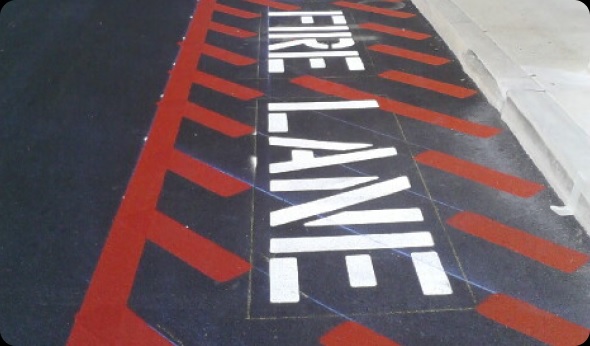
By carefully considering these striping layout and design principles, you can create a parking lot that is both functional and visually appealing. A professional striping company can provide expert guidance and design services to help you achieve the optimal layout for your specific business needs while ensuring compliance with local regulations and industry best practices.
Contact Us Today to Set up a Free Consultation for all of your parking lot striping needs
When you choose D.E. Gemmill for your parking lot striping needs, you can trust that we’ll work closely with you to assess the feasibility and cost-effectiveness of your project, ensuring a seamless and satisfactory experience from start to finish.